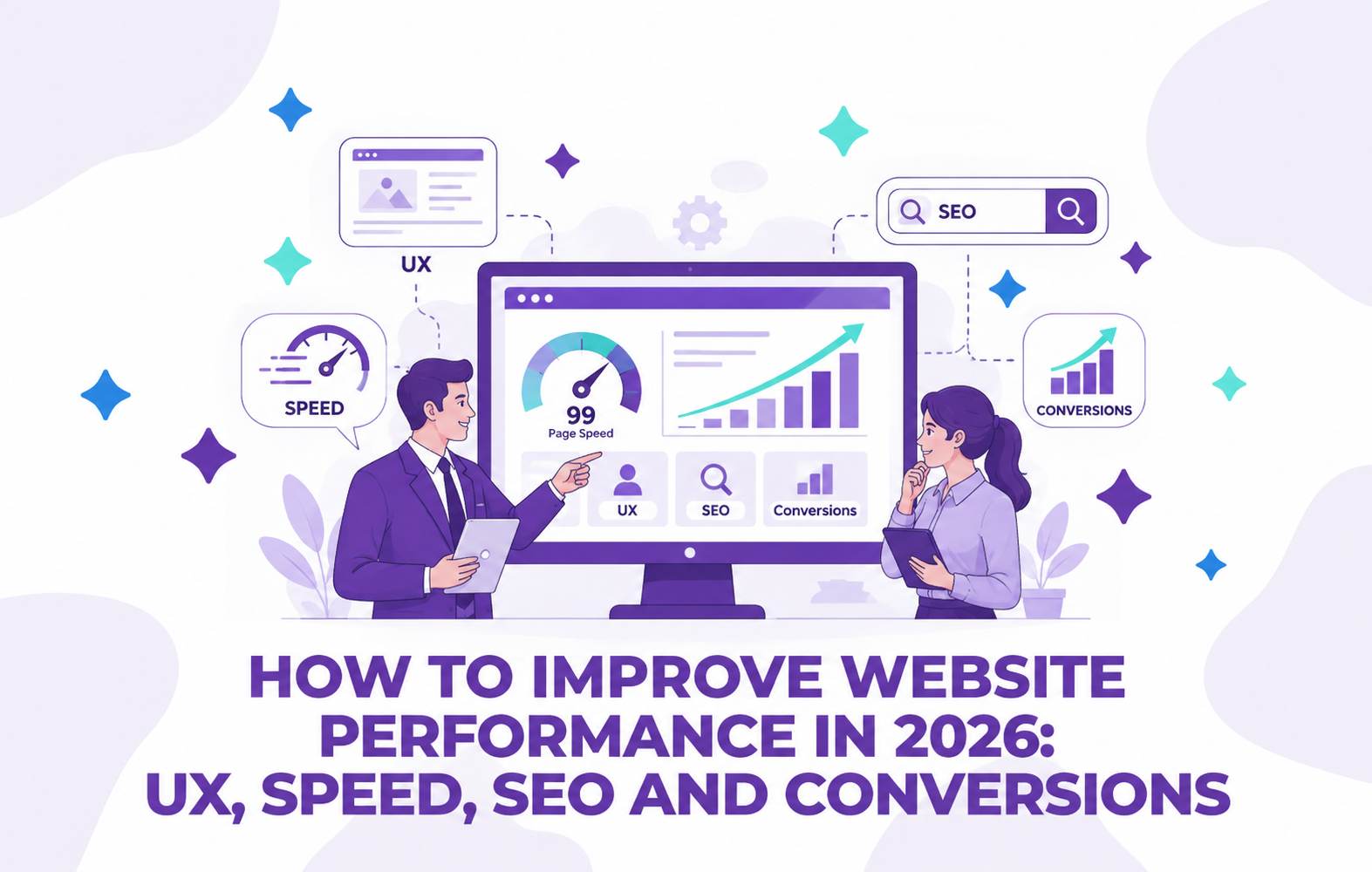
A high-performing website in 2026 needs to do much more than look professional. It should communicate value immediately, make navigation effortless, load quickly across devices, attract relevant organic traffic, and guide visitors toward meaningful actions. This is why website conversion optimization should be considered from the beginning of the website strategy rather than treated as a final adjustment after launch. Every element – from page structure and messaging to forms and analytics – should help visitors move naturally from their first interaction to enquiry, booking, purchase, or another important business goal.
Start With a Clear Business Goal
Before changing layouts, buttons, or page designs, define what each important page should achieve.
A service page may need to generate consultation requests. An ecommerce page may focus on purchases. A SaaS landing page may encourage users to request a demo. When too many actions compete for attention, visitors can struggle to understand what they should do next.
The strongest pages usually have one primary conversion goal supported by a clear hierarchy of information. The opening section should communicate what the company offers, who the solution is for, and why the visitor should care. Additional sections can then answer questions, address objections, demonstrate expertise, and build trust.
This approach is particularly important when investing in professional website design services. Design decisions should support business objectives and visitor behaviour rather than focusing only on visual appearance.
Make the First Seconds Count
Visitors rarely read a website from top to bottom. They scan the first screen, headings, visual elements, benefits, and calls to action before deciding whether to continue.
The opening section should therefore avoid vague slogans and unnecessary complexity. A clear value proposition is usually more effective than a creative message that requires interpretation.
Users should quickly understand what they can achieve by working with the company. The next step should also be obvious, whether that means requesting a quote, booking a call, exploring a product, or starting a trial.
Consistency between traffic source and landing page is equally important. If an ad promotes a specific service, users should arrive on a page that immediately continues the same message. Sending them to a generic homepage introduces unnecessary friction and can reduce the likelihood of conversion.
Design Around Real User Behaviour
Strong website user experience is based on how people actually interact with a site, not on assumptions about how they should behave.
Navigation should be predictable. Important information should be easy to find. Buttons should look clickable, forms should be understandable, and content should remain readable on smaller screens. Visitors should not need to search through several pages to understand the offer or find contact information.
Mobile usability deserves particular attention. A website can look excellent on a large desktop screen while creating significant friction on a smartphone. Long menus, overlapping elements, small text, difficult forms, and intrusive pop-ups can quickly damage the experience.
Good UX also reduces unnecessary decisions. Instead of presenting many equally prominent calls to action, pages should guide visitors toward the action most relevant to their current stage in the customer journey.
Connect UX With Search Intent
Organic visibility and usability should not be treated as separate disciplines.
Users arrive from search engines with specific expectations. A person searching for a particular service wants to quickly confirm that the page provides that service. Someone searching for educational information expects a useful answer before being pushed toward a sales action.
A professional SEO agency should therefore consider both search demand and the experience visitors have after reaching the website. Ranking for a keyword has limited business value if the landing page fails to answer the search intent or guide users toward an appropriate next step.
A clear website architecture also helps both visitors and search engines. Logical categories, descriptive headings, relevant internal links, focused service pages, and well-organised content make it easier to understand how different parts of the site relate to each other.
Speed Is Part of the User Experience
Visitors expect pages to respond quickly. Delays can create frustration before someone has even had the opportunity to evaluate the offer.
This makes website speed optimization an important part of overall website performance. Large images, unnecessary JavaScript, excessive tracking scripts, third-party widgets, embedded videos, and poorly configured hosting can all make pages slower than necessary.
Performance should also be reviewed continuously. Websites often become slower over time as teams add analytics tools, chat widgets, advertising pixels, plugins, videos, and new design components.
Image compression, modern file formats, caching, efficient code, careful use of third-party scripts, and reliable hosting can all contribute to faster page delivery.
It is also important to test individual landing pages rather than relying only on the homepage. A campaign page with several embedded tools may perform very differently from the main corporate site.
Build SEO Into the Structure
SEO should be considered during website planning rather than added after development is complete.
Each important page should have a clear purpose and target a specific topic or search intent. Creating several pages that compete for the same queries can make it difficult for search engines to determine which URL is most relevant.
Technical accessibility also matters. Search engines need to be able to discover, crawl, and understand important content. Internal links, heading structure, metadata, indexation settings, structured content, and mobile usability all contribute to stronger foundations.
At the same time, content should remain useful for real visitors. Repeating keywords unnaturally or creating pages purely for search engines rarely produces a strong long-term result. Search visibility should bring relevant visitors into a customer journey that makes sense.
Match Landing Pages to Paid Traffic
Paid advertising can bring highly targeted visitors to a website, but the landing page determines what happens after the click.
A specialist PPC agency may optimize keywords, audiences, ads, bids, and budgets, but campaign efficiency can still suffer if the destination page is slow, unclear, or poorly aligned with the advertisement.
Message consistency is particularly important. The headline, offer, benefits, and CTA on the page should continue the promise made in the ad.
Dedicated landing pages can often provide a more focused experience than sending every campaign to a general service page. They allow businesses to adapt messaging to specific audiences, products, locations, or search intentions while removing distractions that are not relevant to that campaign.
Keep Forms Appropriate to User Intent
Forms often become one of the biggest friction points on lead-generation websites.
The amount of information requested should reflect the value and complexity of the offer. Someone requesting a simple introductory call may not want to complete ten required fields before making first contact.
For complex B2B services, a few qualification questions can be useful because they help the sales team understand the opportunity. The goal is not necessarily to create the shortest possible form, but to avoid asking for information that is not needed at that stage.
Calls to action should also describe what users will receive. “Book a consultation”, “Request a quote”, or “Get a website assessment” communicates more value than a generic “Submit” button.
Measure Actions That Matter
Traffic numbers alone do not show whether a website is performing well.
A site can attract thousands of visitors while generating very few qualified leads. Analytics should therefore focus on actions connected to business outcomes, including form submissions, purchases, calls, bookings, demo requests, and important CTA interactions.
It is also useful to analyse performance by traffic source, landing page, device, and user journey. Paid search visitors may behave differently from organic visitors. Mobile users may encounter problems that are not visible on desktop. One landing page may generate many enquiries while another receives similar traffic but produces almost no results.
Reliable measurement makes it possible to identify these differences and decide where improvements are most likely to have an impact.
Use Data to Improve Conversion Performance
When businesses ask how to improve website conversion rate, the answer is rarely one universal design change. Conversion problems can come from the offer, traffic quality, page structure, messaging, technical performance, trust signals, forms, or the relationship between all of these elements.
The best approach is to identify specific friction points and test focused improvements.
Before planning a full redesign, review whether:
- the main offer is clear within the first few seconds;
- each important page has an obvious primary CTA;
- navigation is simple on desktop and mobile;
- important pages load quickly;
- landing-page messaging matches the traffic source;
- forms ask only for necessary information;
- trust signals appear close to important decisions;
- key conversions are tracked correctly in analytics.
This makes optimisation more systematic. Instead of changing several elements simultaneously, teams can create hypotheses, implement targeted improvements, and measure whether they actually affect user behaviour.
Treat the Website as Part of the Marketing System
A modern website should not operate independently from the rest of the business.
Analytics, CRM platforms, advertising systems, email marketing, booking tools, ecommerce platforms, and sales processes should work together wherever possible. This allows companies to understand not only that a lead was generated, but also which channel brought the visitor, which pages they viewed, and what interactions occurred before the enquiry.
Planning these integrations early can also prevent expensive technical changes later. When the website is built around real marketing and sales processes, it becomes easier to scale campaigns and understand which activities contribute to revenue.
Keep Improving After Launch
Launching a website should be the beginning of optimisation, not the end.
Visitor behaviour changes, competitors update their offers, search demand evolves, new traffic sources are introduced, and additional technologies are added to the site. A website that performs well today may gradually become less effective if it is not reviewed.
Regular analysis should include technical performance, organic visibility, conversion data, mobile experience, landing-page effectiveness, and user behaviour.
Businesses do not necessarily need to redesign the entire website every year. Often, consistent improvements to important pages can produce better results than repeated full rebuilds without enough data.
Conclusion
Improving website performance in 2026 requires a combination of UX, technical speed, search visibility, conversion strategy, relevant traffic, and reliable measurement.
These areas should not operate independently. Fast pages cannot compensate for an unclear offer. Strong SEO cannot generate business results if visitors arrive on a confusing page. Paid traffic becomes expensive when landing pages create unnecessary friction. Good design also has limited value if important user actions are not measured.
The strongest websites treat design, development, SEO, paid media, analytics, and conversion strategy as parts of one connected system. When each element supports the same customer journey, a website can become more than an online presence – it can become a consistent source of qualified leads and revenue.