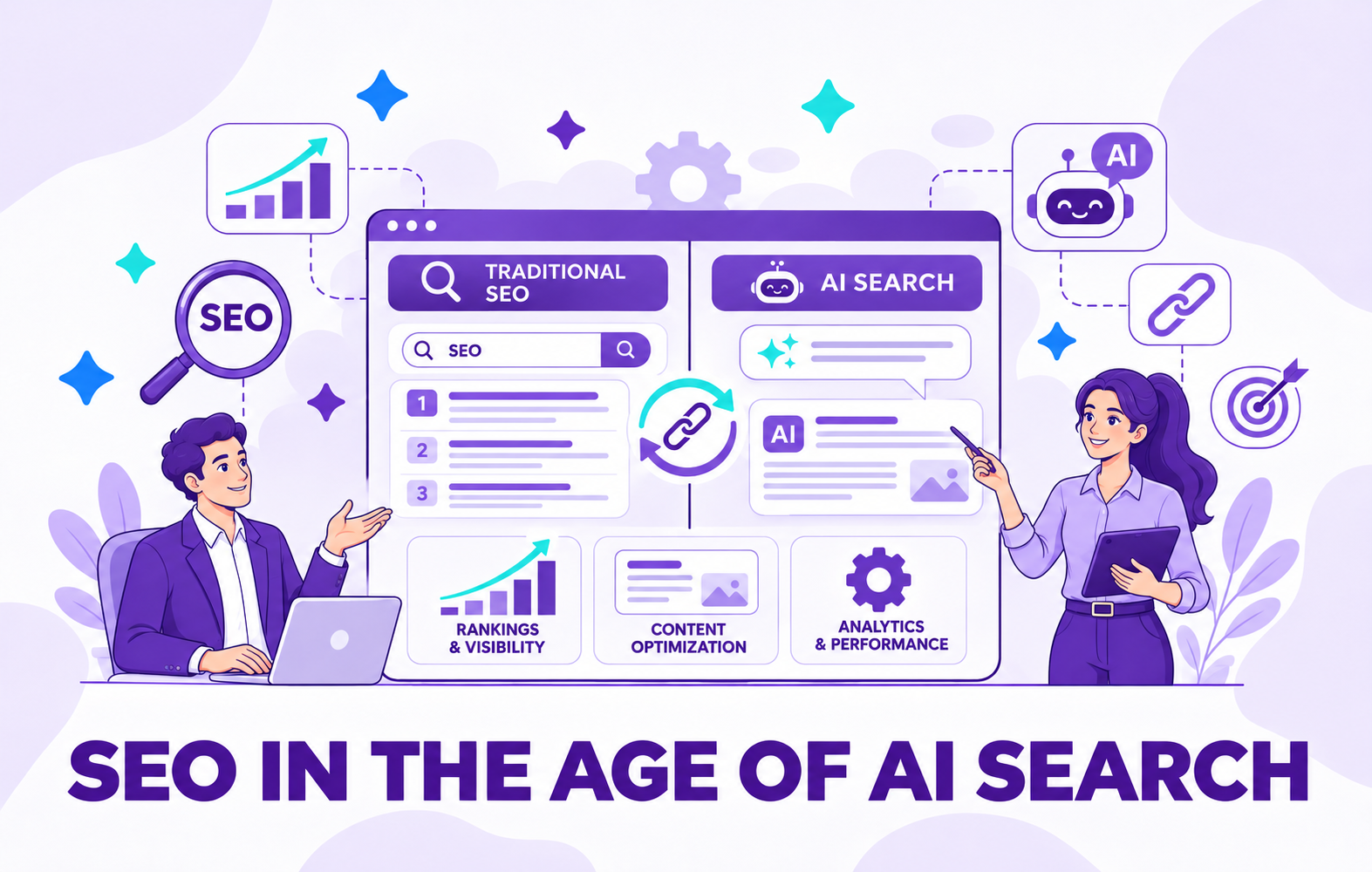
Google AI Mode is changing what it means to be visible in search. Ranking on page one is still important, but users can now receive a generated answer, follow source links, ask a follow-up question and continue researching without starting a completely new search.
For businesses, this creates a practical SEO challenge. Content has to do more than target a keyword. It needs to answer a clear question, demonstrate expertise and give search systems enough context to understand why the page should be used as a source.
SEO Is Moving Beyond Traditional Rankings
The classic SEO process was relatively straightforward: identify search demand, create a relevant page, build authority and improve rankings.
That foundation has not disappeared. Technical accessibility, useful content, internal linking, backlinks and clear page structure still matter. What has changed is the interface between the search engine and the user.
A digital marketing agency now has to consider not only whether a page can rank, but also whether its information is clear enough to be extracted, summarised and referenced inside an AI-generated response.
This means SEO strategy should focus more strongly on useful information and less on filling pages with variations of the same keyword.
AI Search Changes the Type of Queries People Use
With ai search, users can ask longer and more specific questions. Instead of searching for “best CRM”, someone might ask which CRM is suitable for a 20-person B2B company that needs a particular integration and has a fixed monthly budget.
This gives search engines more context about intent. It also means generic pages have a harder job competing with content that directly addresses real scenarios, comparisons and decision criteria.
Useful formats include:
- direct answers to common questions;
- comparison tables;
- practical examples;
- original data;
- clear definitions;
- expert explanations;
- product or service limitations;
- step-by-step recommendations.
The goal is not to write for an AI system. The goal is to create a page that is genuinely easy to understand, verify and use.
What Should Businesses Optimise First?
An experienced SEO agency should still begin with the fundamentals. A site that cannot be crawled properly, has weak internal structure or publishes duplicate content will not solve those problems by adding AI-focused copy.
The first priority should be strong pages around important commercial and informational topics. Each page should have a clear purpose and should avoid competing with several other pages on the same site for the same intent.
After that, businesses can improve content by adding better evidence, clearer answers, useful examples and stronger connections between related topics.
What AI SEO Actually Means
The term ai seo is often presented as a completely new discipline, but most of the useful work is an extension of good SEO.
Search systems still need to discover the page, understand it and determine whether it is trustworthy and relevant. The difference is that content may now appear not only as a traditional blue link, but also as a cited source inside an AI-generated answer.
That makes several areas more important:
- clear page structure;
- descriptive headings;
- concise answers near relevant questions;
- consistent business and author information;
- original expertise;
- updated statistics and examples;
- strong internal linking;
- crawlable HTML content.
There is no reason to create awkward “AI-optimised” text. Natural language, clear explanations and useful information remain the stronger approach.
How AI Overviews Affect Organic Traffic
AI Overviews can answer part of a query directly in the search results, which means some informational searches may generate fewer clicks than before.
But fewer clicks do not automatically mean SEO becomes less valuable. Search visibility is changing rather than disappearing. A brand can be discovered through a cited source, an AI answer, a traditional result or a later branded search.
This makes traffic quality more important than raw traffic volume.
Businesses should monitor:
- organic conversions;
- qualified leads;
- branded search growth;
- landing-page engagement;
- assisted conversions;
- visibility for priority topics;
- pages gaining or losing clicks.
A page with fewer visits but stronger commercial intent may be more valuable than a page generating large volumes of low-intent traffic.
What to Change in Your SEO Strategy
Start with the pages that already matter commercially.
Review whether they answer the real questions customers ask before choosing a provider or product. Remove unnecessary introductions, add useful comparisons, strengthen evidence and make the core answer easy to find.
Then analyse informational content. Articles should support the commercial sections of the website rather than exist only to generate traffic.
The practical objective remains simple: become one of the most useful sources for a topic.
AI is changing how search results are presented, but it has not removed the need for strong websites, credible information and content that genuinely helps users make a decision.